
Read Marion County Property Tax Records
The Marion County Revenue Commissioner pairs assessment data in its free public GIS/CAMA system with separate collection and payment tools. A property card can show land, buildings, total appraised value, an exemption code, the district, and prior tax payments. The tax portal handles the bill side. Keep both the parcel number and account number handy. Names, road spellings, and mailing cities often vary between systems.
| Field | What It Shows | Where |
|---|---|---|
| Land and building totals | Separate appraised components | GIS/CAMA property card |
| Appraised and assessed value | Full appraisal and taxable class share | Revenue Commissioner |
| Exemption | Homestead code applied to the parcel | CAMA card and appraisal office |
| Tax history | Tax year, paid date, and amount on sampled cards | CAMA detail |
| Bill and delinquency | Current obligation or published lien-auction status | ING Property and tax office |
An appraised figure is not a verified sale price. Cards can carry a deed book, page, and date yet show no sale-consideration field, so confirm the price in the recorded instrument itself. For comparing valuation terms rather than paying a bill, the Marion County value guide breaks the language down separately.
How Alabama Turns Marion County Value Into Tax
Alabama starts from fair and reasonable market value. A statutory assessment class is then applied to that figure. Local millage is charged on the result. Class II property is generally assessed at 20 percent. Class III agricultural, forest, residential, and historic property generally carries 10 percent. Current-use treatment can lower the base for qualifying farmland and timberland.
- Appraised value
- The appraisal office's estimate of full value for tax administration.
- Assessed value
- The appraised value multiplied by the statutory class ratio.
- Millage
- Tax levied per thousand dollars of assessed value.
- Tax lien
- The public claim arising when property tax remains unpaid.
These are linked terms, not interchangeable prices. Two Marion County parcels with similar appraised values can still owe different tax once exemptions and district levies apply. The Alabama property-tax assessment page illustrates the statewide formula behind these fields.
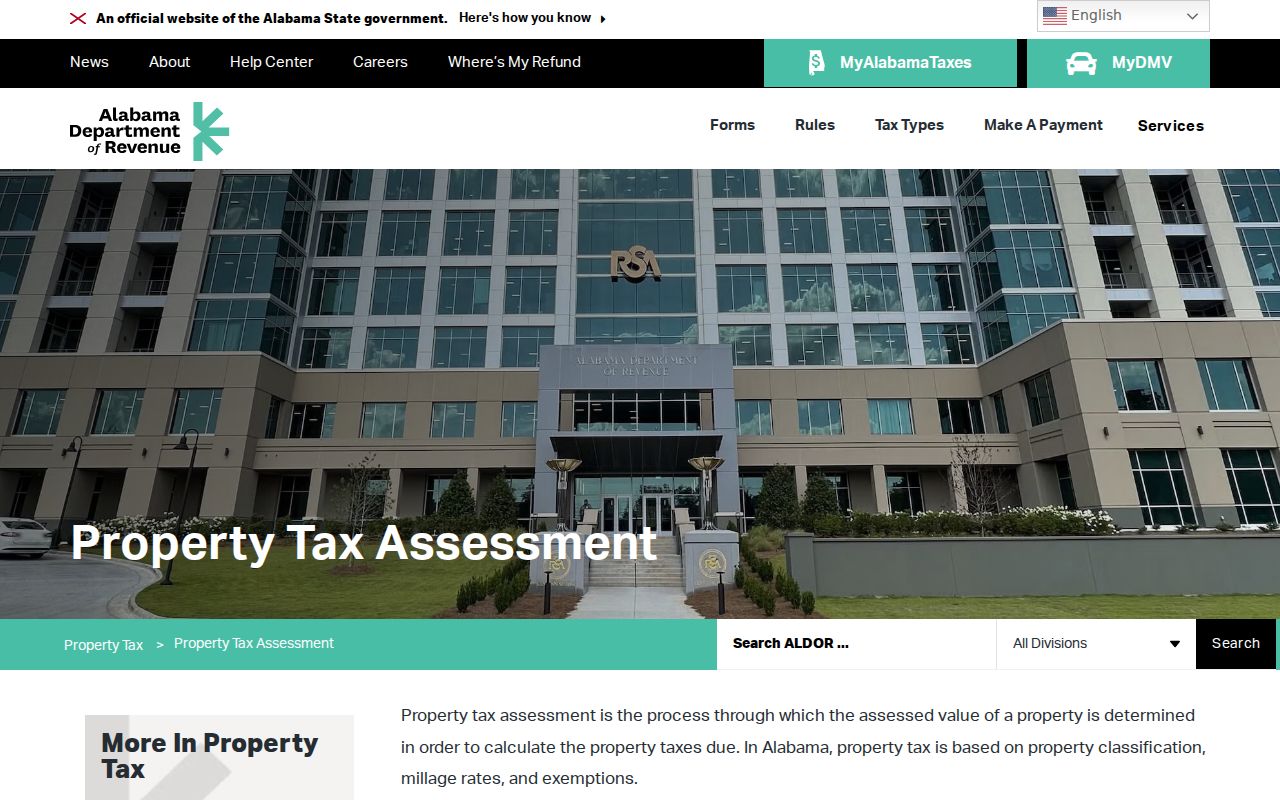
State guidance supplies the formula, and the Marion County card supplies the parcel-specific numbers that fill it in.
Fields on a Marion County CAMA Card
The public Marion GIS/CAMA search accepts a pin, parcel components, owner, address, acreage, total value, district, and subdivision. Its detail cards list the physical address and the owner's mailing address separately. Deed and tax-history clues sit on the card too.
| Search clue | Why it helps | Caution |
|---|---|---|
| Parcel, pin, or account | Keeps the correct tax record in view | They are separate identifiers |
| Physical address | Finds the site by street | Rural road forms can differ |
| Owner | Finds parcels on the current roll | Co-owner and entity spelling varies |
| District or subdivision | Narrows city and neighborhood results | Postal city alone does not set district |
Sample cards show the range of fields. One Marion County card lists land and building totals, appraised value, a 2024 paid date with amount, and a distinct county tax district. Read samples as field inventories, not typical values for every parcel.
Look Up a Marion County Tax Bill
The county links an ING Property search and Alabama's ALPropTax route for bills. The direct Marion payment screen can be slow to load, though. Start in CAMA to pin down the exact parcel first. Then move to the official bill system for the amount due. If the web screen fails, call or visit the Property Tax Office. Do not infer payment status from an old card.
- Search CAMA by physical address and record the parcel, pin, and account.
- Open the county-linked tax portal and search the same key for the current tax year.
- Compare the billed parcel, district, exemption, and owner with the CAMA card.
- Contact the tax office about missing years, a payment not yet posted, or any delinquent status.
You can pay in person at the courthouse tax office. The Revenue Commissioner listing gives 205-921-3561 for general and tax-collection questions and 205-921-4996 for appraisal questions. Those numbers are the best fallback whenever the online system is down.
Marion County Homestead Codes H-1 Through H-4
Alabama publishes four homestead categories, and the local appraisal office handles applications. H-1 is the standard principal-residence exemption. H-2, H-3, and H-4 apply under distinct age, disability, income, and tax conditions. A code on a Marion County property card shows what the roll displays. It does not prove continued eligibility. Review state guidance at the Alabama Department of Revenue homestead page. Then ask Marion appraisal staff which proof and filing deadlines apply. Never copy an exemption from a former parcel. A deed transfer does not carry it over either.
The 2026 Marion County Tax-Lien Notice
Marion County's contracted delinquent page published a May 18, 2026 lien auction for the 2025 tax year. It ran through GovEase. The notice cited a $45 administrative fee under Alabama Code §40-10-184. Its columns list account, parcel number, name, current-year total, prior-year total, and total due. The parcel rows may populate only as the auction nears. The notice shows what a delinquency list can contain. Appearance on a tax list is not proof of foreclosure, ownership, or clear title. Alabama itself warns that a tax certificate or tax deed does not guarantee clear title. Before acting, verify the current balance. Also confirm redemption status, parcel description, and later records with Revenue and Probate.
Contest a Marion County Final Assessment
Start by asking the Marion appraisal office to explain the parcel characteristics and value used. Bring facts tied to the record. An incorrect land area can count. Wrong structure details and poor property condition also count. A relevant independent appraisal does too. For a final Alabama Department of Revenue assessment, state guidance allows a 60-day appeal period. The appeal routes to the Alabama Tax Tribunal or circuit court. It is subject to the stated notice and payment or bond rules.
Check the notice. Marion County's local appraisal-cycle deadline was not published in the research, so follow the date and forum printed on the actual notice.
The official state final-assessment appeal page spells out a 60-day window. That deadline belongs to the state process. Do not assume it matches a Marion County Board of Equalization deadline. Call appraisal staff promptly so the correct local route stays open.
Start by separating factual errors from honest disagreements about judgment. Pull the Marion card. Check the physical address, acreage, land classification, building type, year, base area, improvement list, exemption, and district. A single wrong parcel characteristic can skew the appraisal even when the formula itself is applied correctly. Keep a dated copy of the card. Then gather photographs, surveys, repair records, or a qualified appraisal that speaks to the same valuation date. Evidence about another parcel helps only when its use, location, land, and improvements are genuinely comparable.
Tax history on a CAMA card is no substitute for a current receipt. Sample rows show a tax year, paid date, and amount. But they may not reflect every unpaid balance or later transaction without delay. For a closing, redemption question, or disputed payment, go through the official tax office or county-linked payment system. Request confirmation tied to the parcel and account. File the confirmation with the deed clue. Owner names and mailing addresses change while the land key stays stable.
District fields deserve their own check. Hamilton, Winfield, and Guin mailing names are postal clues, while CAMA City and Tax District fields describe assessment geography. A rural parcel can receive mail through a city without carrying that city's tax treatment. If the district looks wrong, ask appraisal staff which boundary record controls and when the roll was updated. Never infer a levy from a ZIP code or a nearby property. And never copy a neighbor's exemption or district into an appeal.
Delinquent research has a sequence. First confirm the exact account and parcel through Revenue. Next read the official lien-auction notice for the tax year, amount columns, date, and stated fee. Then check Probate for later instruments and Alabama DOR material for any state-held interest. A list can change. An owner name can lag. A certificate can be redeemed. The state's warning that neither a tax certificate nor a tax deed guarantees clear title sits at the center of any purchase decision.
Label every figure with its source and year. Say whether it came from CAMA, a tax bill, a receipt, a delinquent list, or a notice. That habit keeps a prior payment from being mistaken for the current balance. It also keeps an appraised figure from being reported as assessed or taxable value. When screens conflict, Revenue can explain the county tax record. Probate remains the source for the recorded ownership instrument.